

We developed a VR training experience for the College of American Pathologists to support internal onboarding and staff adaptation. The goal was to help new employees understand the role and structure of the organization’s laboratories, including what pathologists do, how different divisions operate, and what types of equipment and procedures are involved.
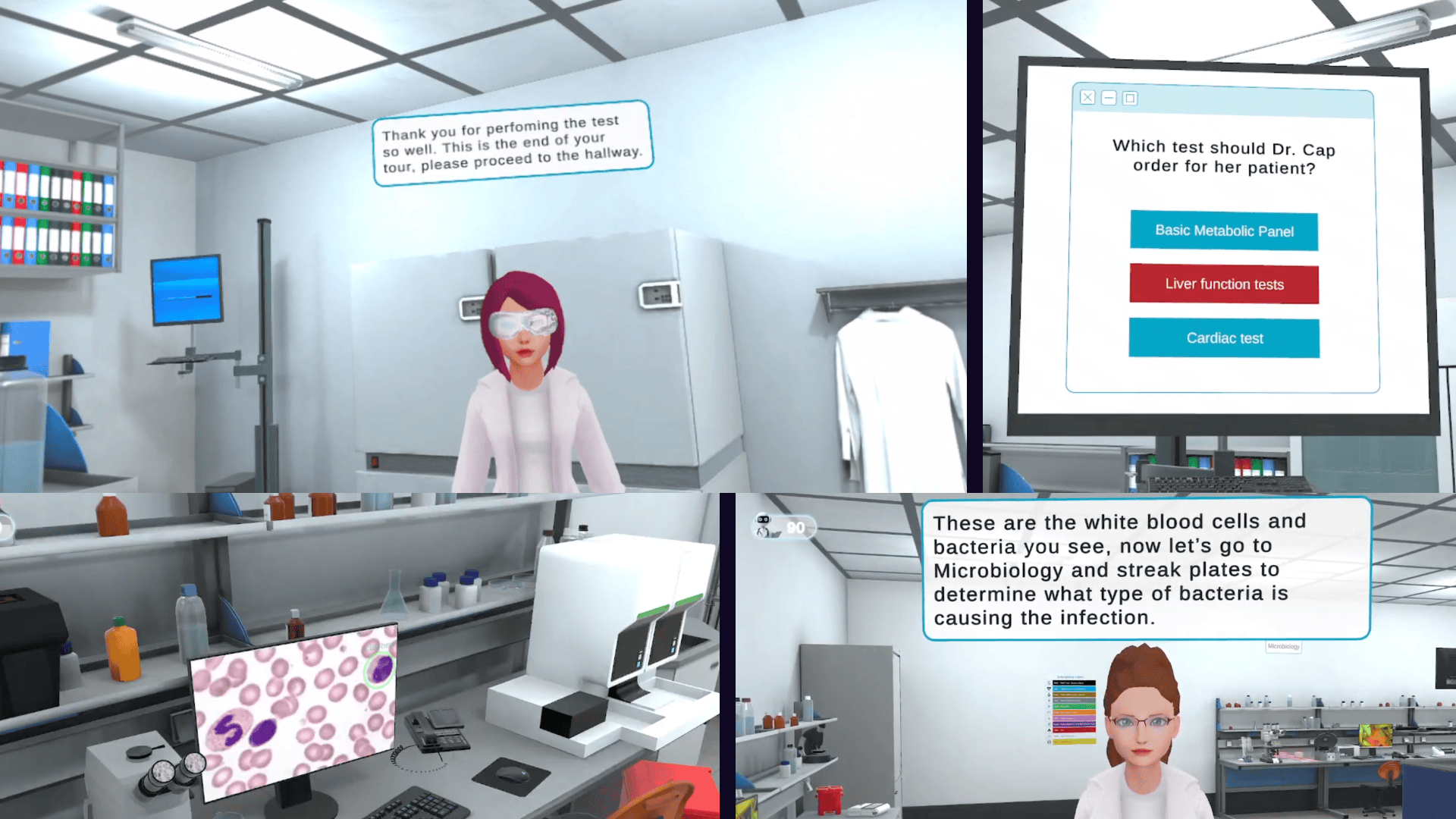
Through this interactive and gamified VR simulation, users can explore a realistic lab environment, interact with equipment, meet virtual colleagues, and perform basic tasks in key lab departments such as Chemistry, Cytology, Histology, Hematology, Molecular, Microbiology, and Blood Bank.
To guide users throughout the experience, we implemented AI-generated voice narration and interactive NPCs (non-player characters) that speak directly with users and provide real-time instructions via AI Text-to-Speech systems.


 Client’s wants & needs
Design an immersive experience to introduce new employees to the lab ecosystem and help them understand the role of each department.
Make the learning process engaging through mini-tasks, challenges, and interactions with lab staff and tools.
Recreate real-world lab spaces, equipment, and workflows as close to reality as possible — including microscopes, analyzers, and lab stations.
Provide two delivery options: one for Meta Quest VR headsets and another for Windows desktop use, with matching functionality and assets.
Integrate a progress-tracking and scoring system to reward users who complete the full experience.

Understanding and adapting highly specialized medical workflows for a VR format
Recreating complex lab machinery and processes in an accessible and interactive way
Balancing scientific accuracy with simplicity to avoid overwhelming new employees
Ensuring compatibility across both VR and desktop platforms
Implementing AI-powered voice guidance that sounds natural and responds to user pacing
The College of American Pathologists now uses this application as part of its employee onboarding process. It helps new and existing staff better understand internal lab operations and their role within the broader organization.
The company also benefits from a stronger employer brand, showcasing innovation in HR training and medical education. The simulation has improved engagement, reduced adaptation time, and created a more memorable introduction to the workplace.


