


Augmented Reality in Training: How AR is Elevating Employee Education


Augmented Reality (AR) is transforming how companies train their employees. It provides an interactive and immersive learning experience. Employees can practice complex tasks, learn new skills, and collaborate with their peers without leaving the office. As technology evolves, AR training offers numerous benefits to organizations. This potential extends across various industries and skill levels. So, are you prepared to embrace this change?
Key Takeaways
- Augmented Reality (AR) training is transforming the way businesses train their employees, providing immersive and interactive learning experiences.
- AR offers numerous benefits including enhancing employee engagement, reducing training time and costs, improving knowledge retention and transfer.
- Companies can prepare for the future of AR in Training by staying abreast of emerging trends & incorporating AI to create personalized learning paths.
Understanding Augmented Reality in Training
Augmented Reality (AR) integrates digital augmentation with real world environments, offering an immersive and interactive augmented reality learning experience. Industries such as the manufacturing industry benefit immensely from AR, shortening training time, enhancing employee skills faster, and reducing training costs. With the right training processes, organizations can maximize the benefits of augmented reality solutions in employee training.
Meanwhile, Virtual Reality (VR), though akin to AR, carries its distinct advantages. Cutting-edge advancements in augmented reality have ushered in fresh insights across multiple industries.
Safety and responsible use are paramount, particularly in workplaces with fast-paced machine automation. Such technology shifts impact human performance expectations in ways unanticipated in past decades.
How Augmented Reality Works in Training
Using AR technology, employees can interact with 3D objects, enhancing their training experience. For example, a technician might wear AR glasses and receive step-by-step instructions to repair machinery.
Similarly, a medical student can practice surgery through a virtual representation of patients. Techniques like Image Target AR, Object RecognitionAR, and Plane Detection AR substitute traditional training manuals. They let users engage with digital models of equipment in a simulated environment, often on mobile devices.
For personnel needing video guidance for job-related issues, AR headsets offer augmented reality solutions. These solutions allow experts to remotely diagnose and address problems in real-time.
Augmented vs. Virtual Reality in Training
Augmented Reality (AR) and Virtual Reality (VR) both provide immersive experiences. While an AR app overlays virtual objects and information on a device screen, enhancing the real world environment for interaction, VR creates a wholly simulated environment on the device screen, immersing users in a fabricated setting.
Using AR for training can heighten employee engagement, cut training costs and time, and amplify knowledge transfer and skill development. Industries like the manufacturing industry and healthcare sector are already benefitting, especially in high-risk training scenarios. This points to technology’s role in enhancing both soft skills training and development. As technology progresses, it’s clear that AI will shape the learning path, further boosting augmented reality’s capabilities in collaborative learning strategies.
Key Advantages of Augmented Reality Training
Companies are embracing AR training for job training and skill development, and the benefits of augmented reality technology are evident. It enhances the way organizations train employees, resulting in:
- Increased Engagement: The interactive nature of AR, combining hands-on experience with voice commands, immersive visuals, and videos, captivates learners.
- Cost and Time Efficiency: AR training reduces both training time and costs.
- Improved Knowledge Transfer: Employees retain and apply what they learn better.
- Personalized Learning: Educators can tailor the material to individual needs.
- Motivated Participants: The innovative approach of AR keeps new hires engaged without relying on monotonous memorization techniques.
With AR training, companies save significantly on training costs. New employees can quickly familiarize themselves with advanced technologies without needing specialized equipment or technical staff support.
Enhancing Employee Engagement
By leveraging AR technology, organizations boost employee engagement and aid skill development. Tools like smart glasses, including Microsoft HoloLens utilized by Mercedes-Benz in assembly processes — offer personnel immersive experiences with real-world objects and scenarios.
For example, medical professionals use augmented reality training to safely guide surgical operations, increasing accuracy. These AR tools provide a deeper understanding of intricate subjects.
Reducing Training Time and Costs
Using AR training enhances the efficiency of corporate training. Swapping out physical materials for digital simulations cuts down on traditional training expenses like travel and venue fees.
Employees can learn at their own pace, reducing time in actual training sessions and boosting productivity. In sectors such as manufacturing, AR methods can notably decrease assembly line task durations, leading to reduced operational costs while keeping efficiency high.
Improving Knowledge Retention and Skill Acquisition
AR training offers a safe simulated environment, allowing users to polish existing skills and learn new ones. This approach enhances performance and minimizes errors compared to conventional training.
For delicate situations, lifelike simulations give employees the chance to familiarize themselves with protocols without risks. This not only leads to better outcomes but also boosts employee satisfaction.
The benefits of virtual training scenarios in improving knowledge retention and skill acquisition are significant. Overall, using augmented reality yields positive results across various facets of training.
Real-World Examples of Augmented Reality in Training
AR training is gaining traction in various sectors, with many successful applications highlighting its transformative power. It’s especially impactful in fields like manufacturing, healthcare, and high-risk training scenarios.
In manufacturing, AR technology guides employees step by step during their training or any instructional design activity. This interactive content streamlines the learning process, making it easier to grasp new concepts.
Manufacturing Industry
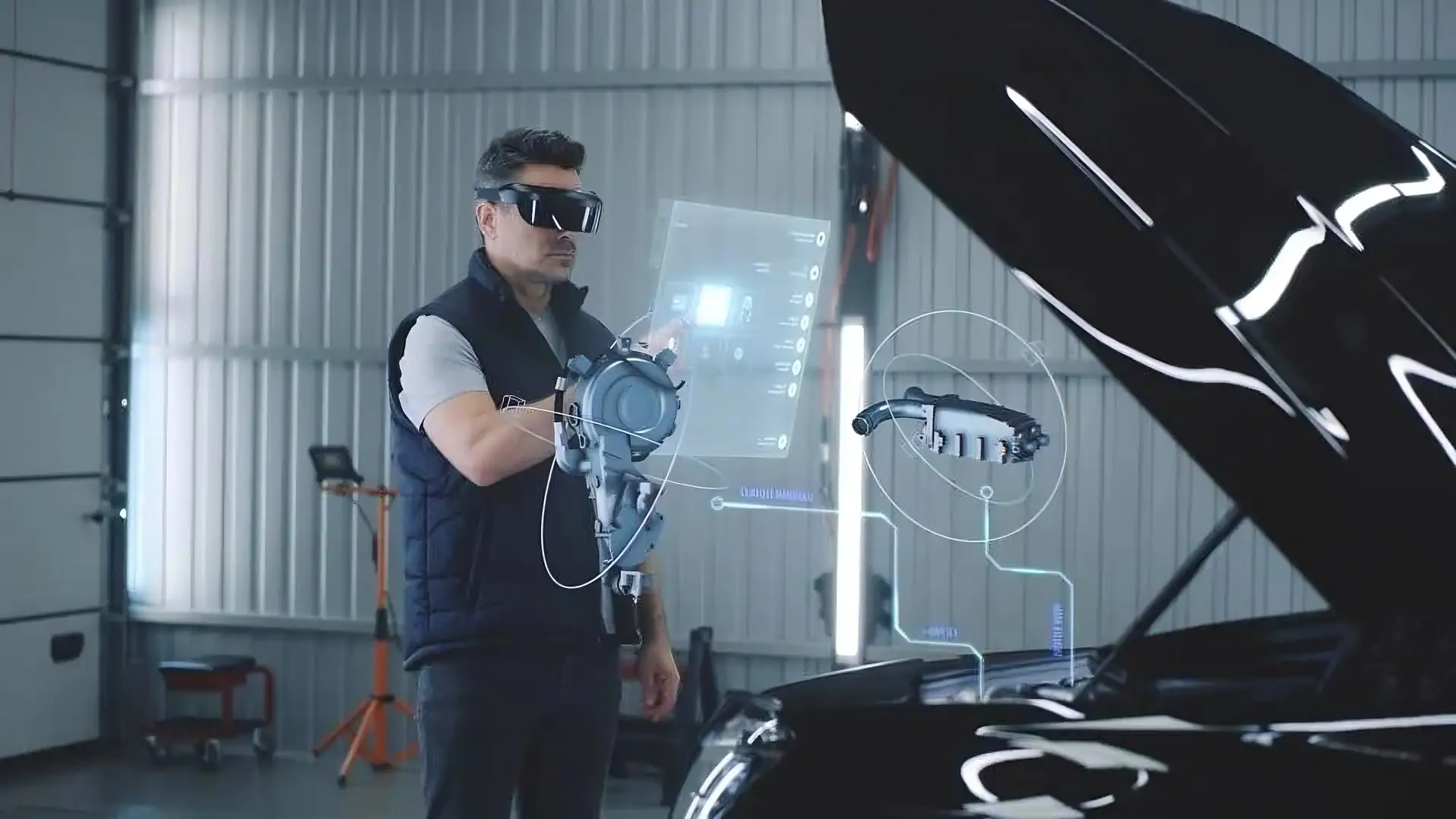
The adoption of AR glasses in the manufacturing sector has led to numerous benefits. They reduce human errors, boost productivity, and offer interactive guidance through both AR glasses and smart glasses.
Mercedes-Benz, for example, uses Microsoft HoloLens and AR glasses. These provide technicians with visual instructions and real-time feedback to enhance complex assembly processes. On the other hand, Skoda Auto has implemented a training program that leverages augmented reality. This program helps employees learn modern sales techniques and offers insights into post-sale customer service.
Healthcare Sector

In healthcare, AR training offers medical professionals enhanced skill development. It delivers clear views of the human body, interactive guidance, and realistic procedure simulations, ensuring safer practice and better patient results. For instance, surgeons use AR headsets to view internal anatomy, helping them prepare for operations more efficiently. Students, too, benefit by practicing essential skills without any associated risks.
High-Risk Scenarios

AR technology is pivotal for training in high-risk scenarios. With the power of augmented reality, personnel can engage in dangerous simulations safely.
For example, firefighters employ augmented reality training to develop skills, confronting virtual fire scenarios relevant to everyday life. This immersive learning environment allows them to practice without actual danger.
Similarly, military personnel benefit from AR training sessions, which enable them to become familiar with combat strategies. These virtual practices prepare them for real-world environment challenges and life conditions.
Developing and Implementing Augmented Reality Training Solutions
To fully harness the potential of AR technology for employee learning, organizations need to seamlessly integrate it into their training initiatives. This involves:
- Selecting the Appropriate Device and Platform: Choosing the right tools is paramount to ensure compatibility and user-friendliness.
- Designing Effective Training Manual and Scenario: Crafting tailored scenarios and manuals enhances the training experience and ensures learners can easily grasp the content.
- Addressing Common Implementation Challenges: Proactively tackling common challenges ensures smoother transitions and maximizes the benefits of AR training.
By carefully considering these aspects, organizations can successfully develop and roll out AR solutions, ultimately achieving the best results for safety and personnel education.
Choosing the Right AR Technology Platform
Selecting the most suitable AR platform is crucial for organizations aiming to successfully integrate augmented reality into their employee training. To make an informed decision:
- Device Compatibility: Ensure the platform aligns with the hardware devices you plan to use.
- User Experience and Scalability: The platform should offer a seamless experience for users and be able to accommodate growth.
- Alignment with Business Objectives: Does the platform fit the company’s goals, budget, and available resources?
- Gathering User Feedback: This helps in validating if the chosen platform meets the needs and expectations of the users.
- Quality Assurance Processes: Regular checks ensure that the platform remains up-to-date and efficient.
- Geolocation Support and Licensing Terms: Check the availability of geolocation support and understand the licensing terms and costs associated with the software development kit or framework.
Designing Effective AR Training Scenarios
Designing impactful AR training sessions and AR applications requires a thoughtful approach to ensure optimal learner engagement and knowledge retention:
- Setting Objectives: Begin by defining clear training goals that your AR scenarios and applications aim to achieve.
- Understanding the Target Audience: Knowing the learners’ profiles and their needs can help in crafting tailored experiences.
- Choosing the Right Platform and Environment: Consider where and how the AR training will be deployed, ensuring its suitability for the intended purpose.
- User-Friendly Interface: An intuitive AR app interface ensures users can easily interact with the content, enhancing the learning experience.
- Adherence to Visual Design Principles: It’s vital to craft immersive and visually appealing AR experiences, and this can be achieved by consistently adhering to sound design principles.
- Continuous Evaluation: Assess the efficacy of the AR training and applications at different stages, making necessary adjustments to improve their impact.
Overcoming Common Challenges in AR Training Implementation
The deployment of AR training in an organization brings its own set of challenges, but with the right strategies, they can be effectively addressed:
- Occlusion of Physical Objects: This occurs when virtual objects block or overlay real-world items in a way that disrupts the user’s experience. By using advanced AR software that offers object categorization and depth mapping, this challenge can be mitigated.
- Data Overload: Presenting users with too much information at once can be overwhelming. It’s essential to strike a balance between providing adequate details and not overwhelming the user.
- Positioning Virtual Elements: Ensuring that virtual components are placed realistically in relation to real-world objects, items, or people is crucial. This requires software that can understand and map the surrounding environment accurately.
- User Interface and Navigation: An intuitive user interface paired with clear navigation instructions can significantly enhance the user’s experience with AR training. This ensures that employees can effectively interact with and benefit from the technology.
Preparing for the Future of Augmented Reality in Training
As technology relentlessly progresses, Augmented Reality (AR) training is shaping up to be even more intertwined with AI and collaborative learning, paving the way for honing pivotal soft skills. Staying updated and integrating AR training could be instrumental for organizations aiming for augmented employee engagement and output. Such advancements could mark significant enhancements for the workforce by amplifying crucial capabilities required both within and beyond their professional milieu.
The Role of Artificial Intelligence in AR Training
Organizations can use artificial intelligence solutions to enhance AR training, providing personalized learning paths, videos and real-time feedback that creates more realistic and immersive scenarios for manufacturing, healthcare or high risk settings. This gives the team and employees tailored guidance to maximize their potential in the role with a smoother overall experience of learning.
AR Training featuring AI can help create an adaptive environment where company and team is able to offer support appropriate to each individual learner as well as increase efficacy within trainings so everyone in training session is getting what they need out of it.
Collaborative Learning with AR
AR training program that employs collaborative learning, can have many positive effects on companies. It encourages employees to engage in the same activity at once and share experiences remotely through AR-enabled systems, while also allowing for team building and communication within a learning environment.
The use of augmented reality technology in this way has been shown to enhance and facilitate skill development among those who are partaking in the practice as well as for knowledge transfer and sharing across all levels.
Examples include virtual orator programs utilized by trainees practicing public speaking skills, medical students honing their surgical techniques together virtually, so vital for any successful organization today!
Supporting Soft Skills Development through AR
Organizations can use AR training to help their employees develop essential soft skills. By creating interactive simulations that allow learners to practice and hone these abilities in a supervised environment, businesses are able to provide personalized learning experiences tailored specifically for individual learning styles.
Apps such as Virtual Orator, Speech Center or Public Speaking Simulator facilitate the strengthening of presentation and communication skills by utilizing augmented reality technology. Ultimately, incorporating this type of technical expertise into their soft skills training and skill development allows companies across different sectors the opportunity to foster success in today’s workplace climate.
Summary
Augmented Reality (AR) training has the capacity to revolutionize how companies handle employee education and capability building. By delivering immersive, engaging, and interactive learning activities AR training can improve staff involvement, diminish preparation time and expense of training costs while also supporting information maintenance as well as ability attainment. From manufacturing companies through healthcare areas or even high-stakes conditions, augmented reality instruction reveals its flexibility with countless cases of real-world application.
As we ready ourselves for a future in the workplace in which Augmented Reality is embraced by corporate practices it’s critical that business stay mindful of latest patterns such as artificial intelligence support for new hires, soft skills growth plus collaborative studying initiatives if they are seeking to keep their workforce competitively sharp enough tackle current workplace challenges most effectively.
If you’re keen on delving deeper into the nuances of integrating AR training into your organization, don’t hesitate. Reach out to us at hello@wear-studio.com, and we’ll offer you a complimentary consultation.
Frequently Asked Questions
How is augmented reality used in training?
Augmented Reality (AR) has the potential to revolutionize training by creating interactive and engaging experiences. It can drastically reduce learning times, boost skill acquisition while eliminating hazards during instruction, resulting in superior quality outcomes overall. By using Object Recognition AR technology, learners will be able to interact with digital 3D models without any risks associated – helping them become comfortable and familiarized with various instruments before ever stepping foot into a real-world scenario where it matters most.
What is augmented reality for training employees?
Augmented reality training gives employees an immersive and interactive educational experience. They can utilize this technology to practice hands-on activities without the risk of harm done to goods or machinery. It consists of a camera, software, and projections from the computer which allows users to interact with images in virtual reality. With augmented augmented and virtual reality training techniques, personnel are enabled to gain proficiency by simulating real life scenarios safely, all while having fun!
What companies use augmented reality for training?
Employees of Walmart and Chipotle benefit from augmented reality, which serves as an efficient tool for practical training by offering a multi-sensory experience that is realistic. This technological advance helps to train and achieve better results in the workspace.
How does AR training work?
Augmented Reality training equipment enables users to engage with digital materials in a 3D environment, incorporated into the physical world. This device creates an immersive experience and helps learning become more effective.
What industries can benefit from AR training?
Industries such as manufacturing, healthcare and those dealing with high-risk scenarios can leverage the use of AR training to gain an advantage over competitors. With its various applications, utilizing this type of training offers a powerful asset when striving for success.
